How to Choose and Display Family Photos at Home: A Complete Guide
After the excitement of the photo session and the wonder of reviewing your portraits, comes an important part of the process – moving your images away from the screen and bringing them to life as real, tangible objects in your space.
Sounds easy, but it isn’t always. Even if you have the perfect space in mind (and oftentimes, you won’t!), you’ll still be wondering “What size? What style? How many is too many?”. There’s definitely an art to choosing how to frame and display your family photos.
The good news is – your favourite family photographer is here to help 🙂 Whether you’ve just had a session with me or you’re finally getting round to printing some older digital files, this guide is designed to help you select the best images for your space, and create displays that fit in with your personal style.
From a feature wall in the living room to staggered galleries on the stairway, here are some expert tips to help you frame your family photos beautifully and in perfect harmony with your space.

Matching Frames to Your Home Decor
Frame mouldings are an important consideration – almost as important as the images themselves.
Your choice of frame should feel complementary to your space. Choosing the wrong style might lessen the impact of your beautiful portraits. The right one, on the other hand, will elevate not just the photo, but everything around it too.
What is Your Home Style?
Modern homes often suit clean, minimal frames. Think natural woods, slim black or white edges, or aluminium for a more contemporary feel.
Traditional (or very unique) interiors can suit a bolder personality: chunky mouldings, antique golds, deep/aged woods, or even decorative detailing if it complements your space.
Scandi or minimalist rooms might be best suited towards light oak or white-washed woods – simple, light-weight framing that allows the photo to breathe.
This article by Maison Flaneur explores home interior design styles in greater detail – a useful place to start!
Consider Where You’ll be Hanging it
Where will we be hanging the frame? Let’s look at how each room’s character influences our choices.
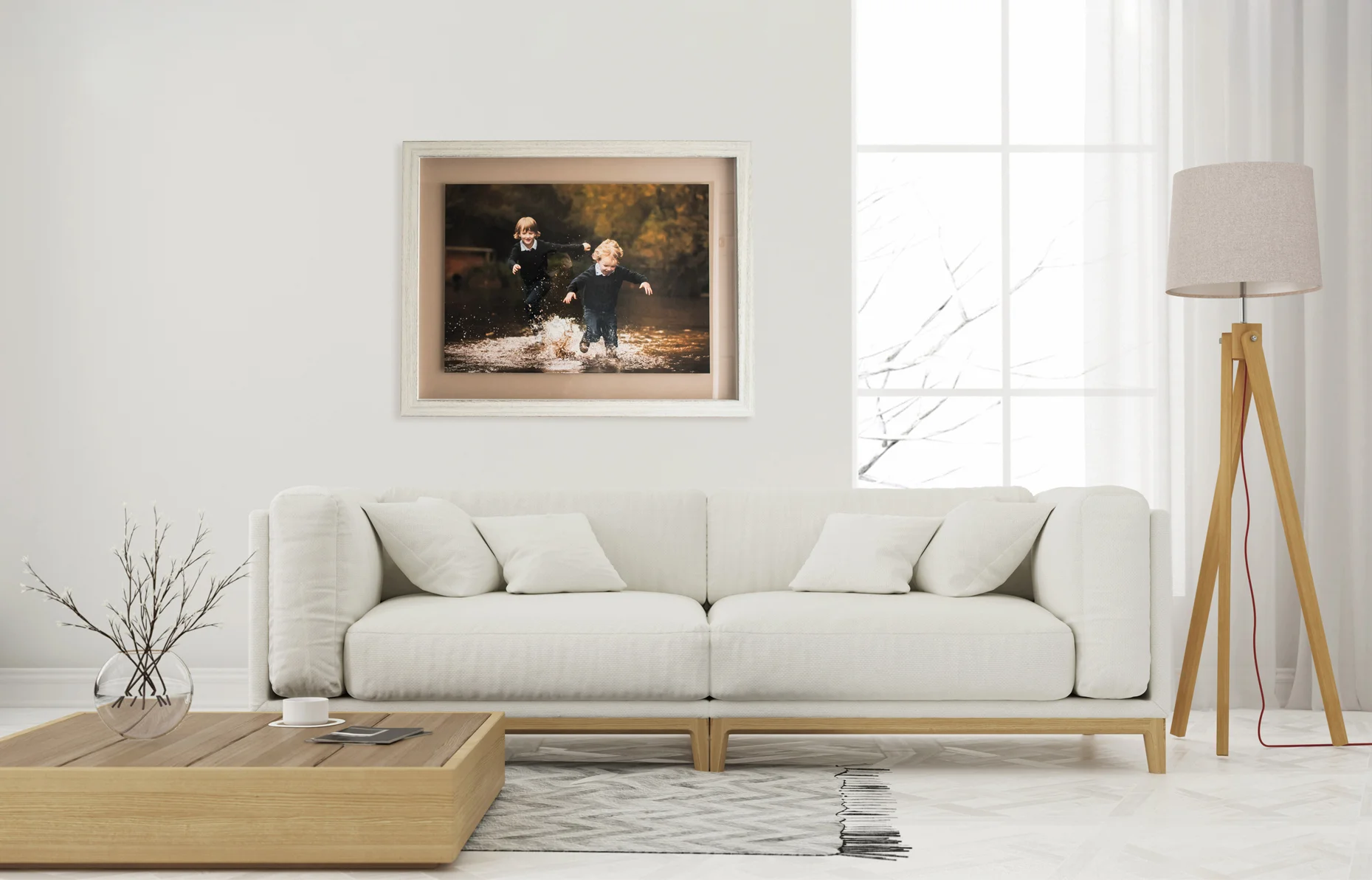
Living rooms work well for larger pieces. A very popular placement, for instance, is a large family group above the sofa or the fireplace.
Stairways and hallways are great for building stories over time, especially with sequences or gallery-style layouts.
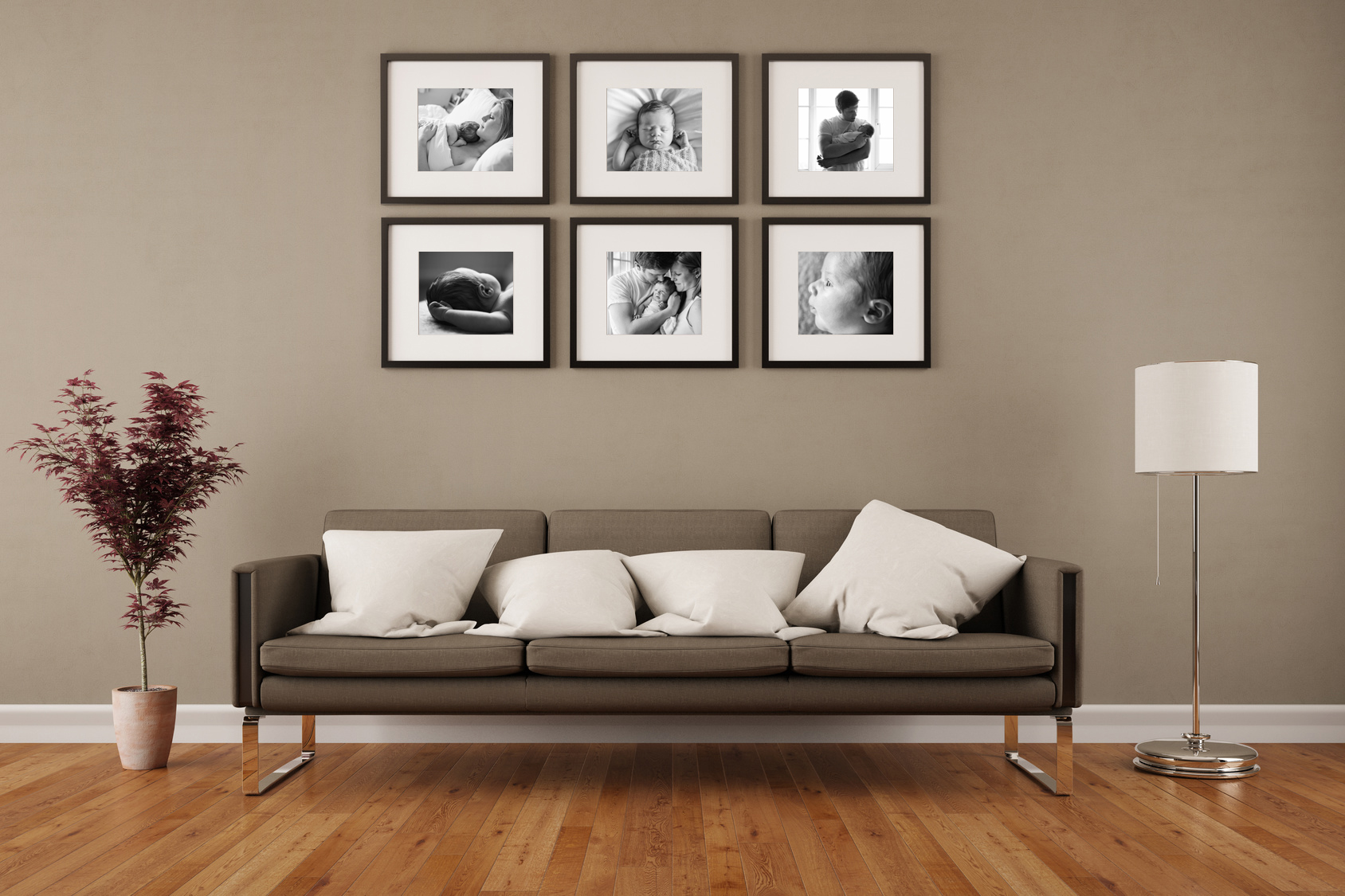
Bedrooms are the ideal space for those more intimate portraits, like a cuddled up newborn shot in black and white.
Even kitchens can be great homes for a happy portrait! A fun, colourful portrait can make the space feel more homely and personal.
And of course, we’d always consider how bright the space is. A sunny hallway with direct light might need anti-glare or UV-protective glass to prevent fading.
Wall-mounted spotlights in a room with less natural light will help make the framed portrait pop.
Choosing the Right Number of Pieces
You might be tempted to get carried away and cram ALL of the pictures on that wall, but is it a good idea? Big gallery walls CAN work, but the number of images needs to be decided based on available space and how well they go together.
The Art of the Gallery Wall
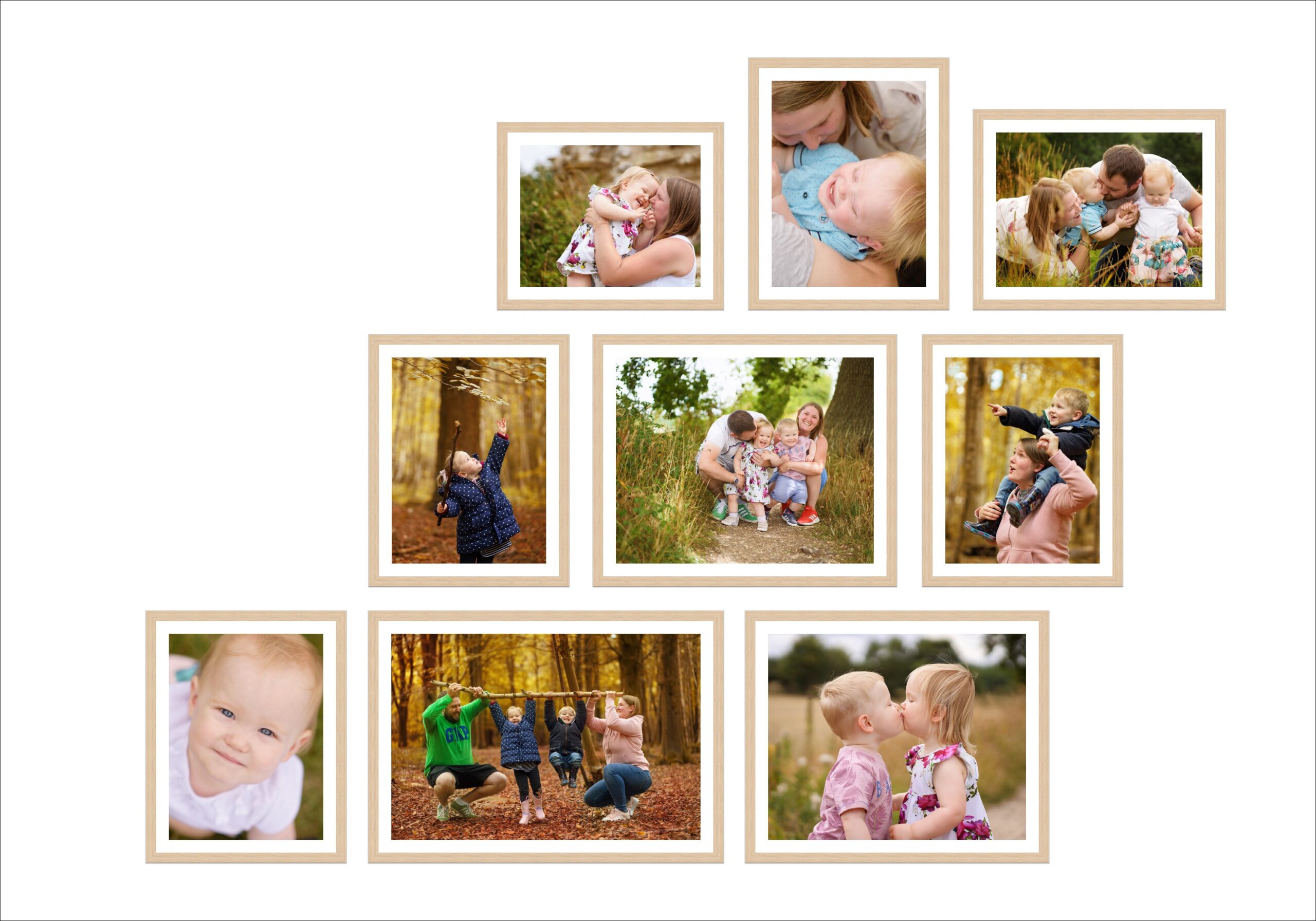
Gallery walls are a great choice when you have a generous amount of wall at your disposal (like on stairways, hallways, or behind the sofa). They are fabulous at telling a story – eg. a family over the years, or a day-in-the-life toddler session.
To make it work in the best possible way, we will need to play with layout (I provide my clients with bespoke mock-ups to help with this!).
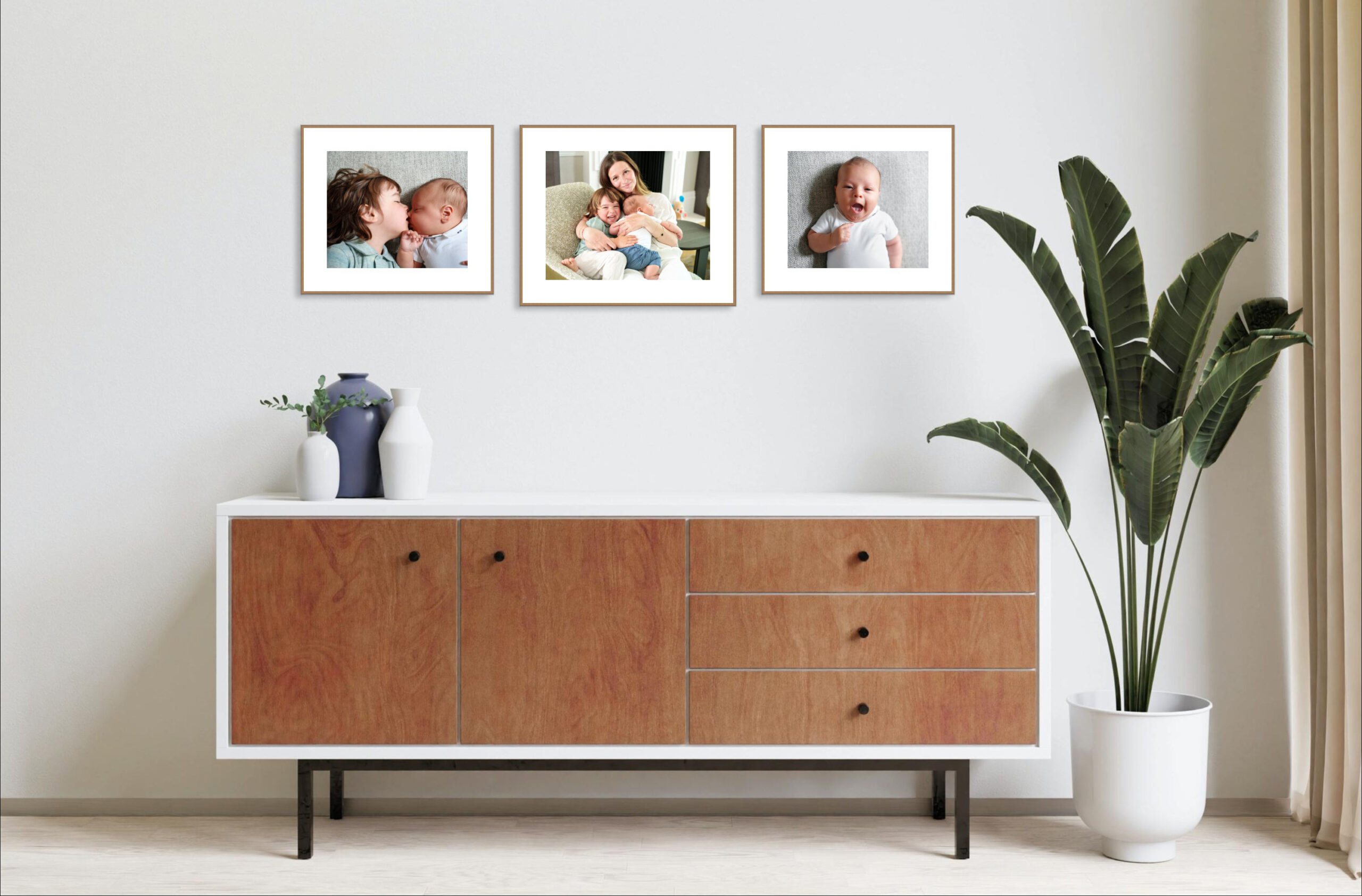
I often use odd numbers like 3 or 5 for a balanced asymmetrical feel, or if we have enough wall space we may even go symmetrical with 4, 6, or 9 for a more structured look.
Want to browse a few gallery layout ideas? The Spruce has a very interesting article with some great examples that are sure to inspire you.
Case Study: A Three-Year Staircase Gallery Wall
One of my favourite examples is a client I worked with over three years. After each annual session, we selected three standout images – a mixture of intimate connections and traditional group shots looking at the camera – and saved them for a future display.
By year three, we had a gorgeous set of nine, with a similar vibe and colour balance. Together, they formed a strong and emotional photo wall that told the family story so far.
We used identical frames with soft white mounts to keep the layout clean, letting the children growing up and the changing seasons take centre stage.
This kind of slow-build gallery is especially powerful if you plan to work with your photographer regularly, because the final result will be consistent in style.
Multi-Image Frames: The Versatile One-Stop Solution
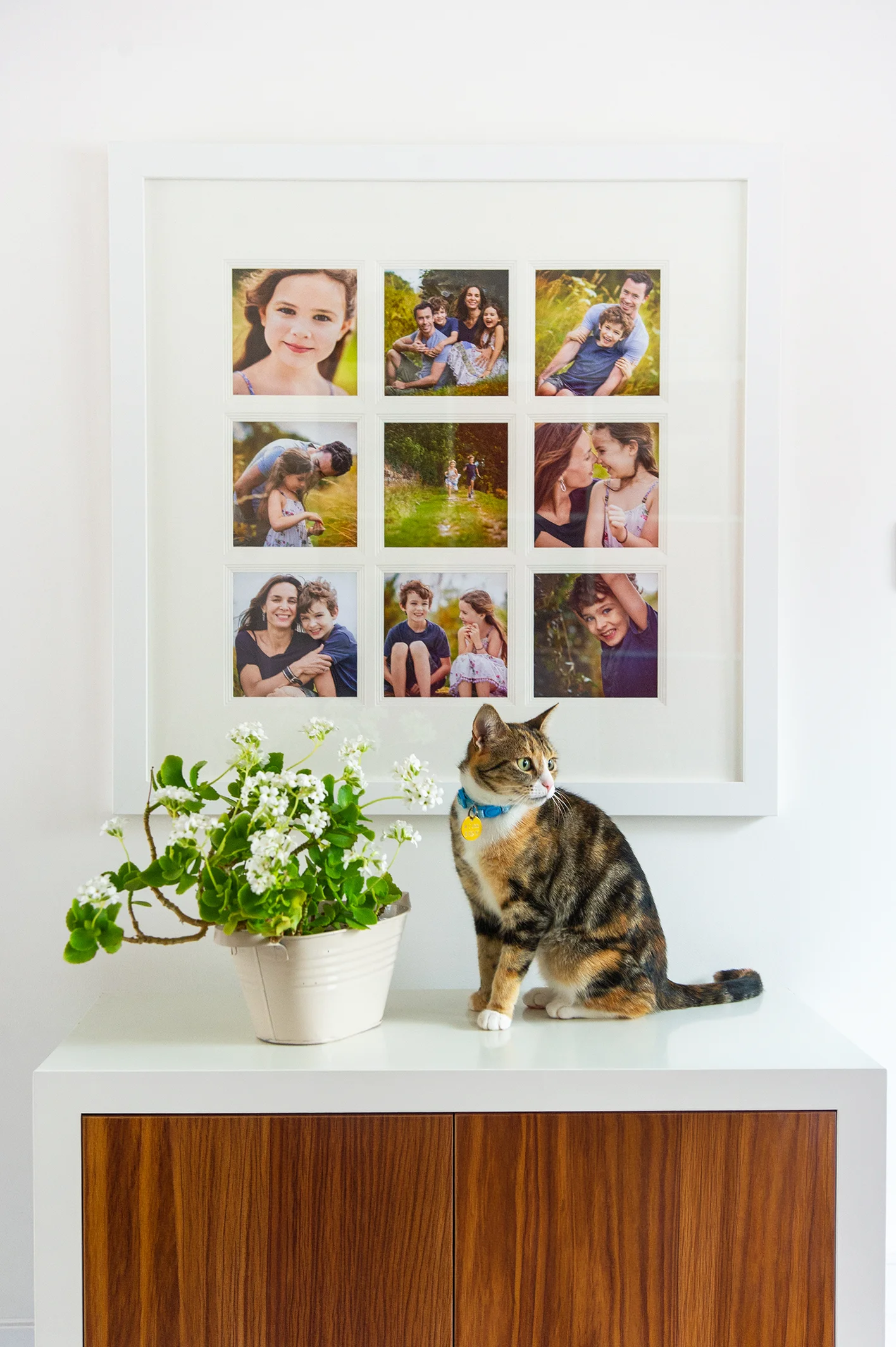
If a full gallery wall isn’t right for your home, you could consider a multi-image frame. Multi-image frames have a strong visual impact and help us tell a story without the overhead and higher cost of spacing and measuring multiple pieces. They are also versatile and can be moved around easily around the house, a perfect fit for smaller spaces, like a hallway, conservatory or upstairs landing.
One of my all-time best sellers is a stunning 9-image square layout that’s really popular with newborn sessions (to fit in tiny details and sleepy shots alongside family combinations) and outdoor family shoots (a variety of candid moments and plenty of colour and texture, like a gallery-in-a-frame!)
The Right Size for the Right Photo
This might be the most common question I get: “What size should I print this?” The answer? It depends on the photo, and where you’re putting it.
There’s no one answer to the sizing question, but we work by a few guidelines. The key is balance and making sure your photo feels “just right” in your space without overwhelming it, or looking a bit lost.
Give Group Shots Breathing Room
Images that include multiple people (especially wider outdoor shots) are generally best printed larger. A 10×8 is perfect as a gift print to be displayed as a desk portrait, but on a wall, it can look a bit small, especially from a normal viewing distance of 2m-3m.
If it’s a family photo with lots of faces and background detail, I recommend at least a 20”x16” print or go bigger if your wall allows. Trust me, it won’t be too big – group images shine when the size is large enough to appreciate everyone’s facial expressions.
Two Ways to Display Close-ups
Close-up portraits of one or two people often work in smaller frames. A series of small close-ups on a gallery wall (preferably mounted) can create a well-balanced flow across the display.
However, that isn’t a hard and fast rule! Not all close-ups belong in small frames.
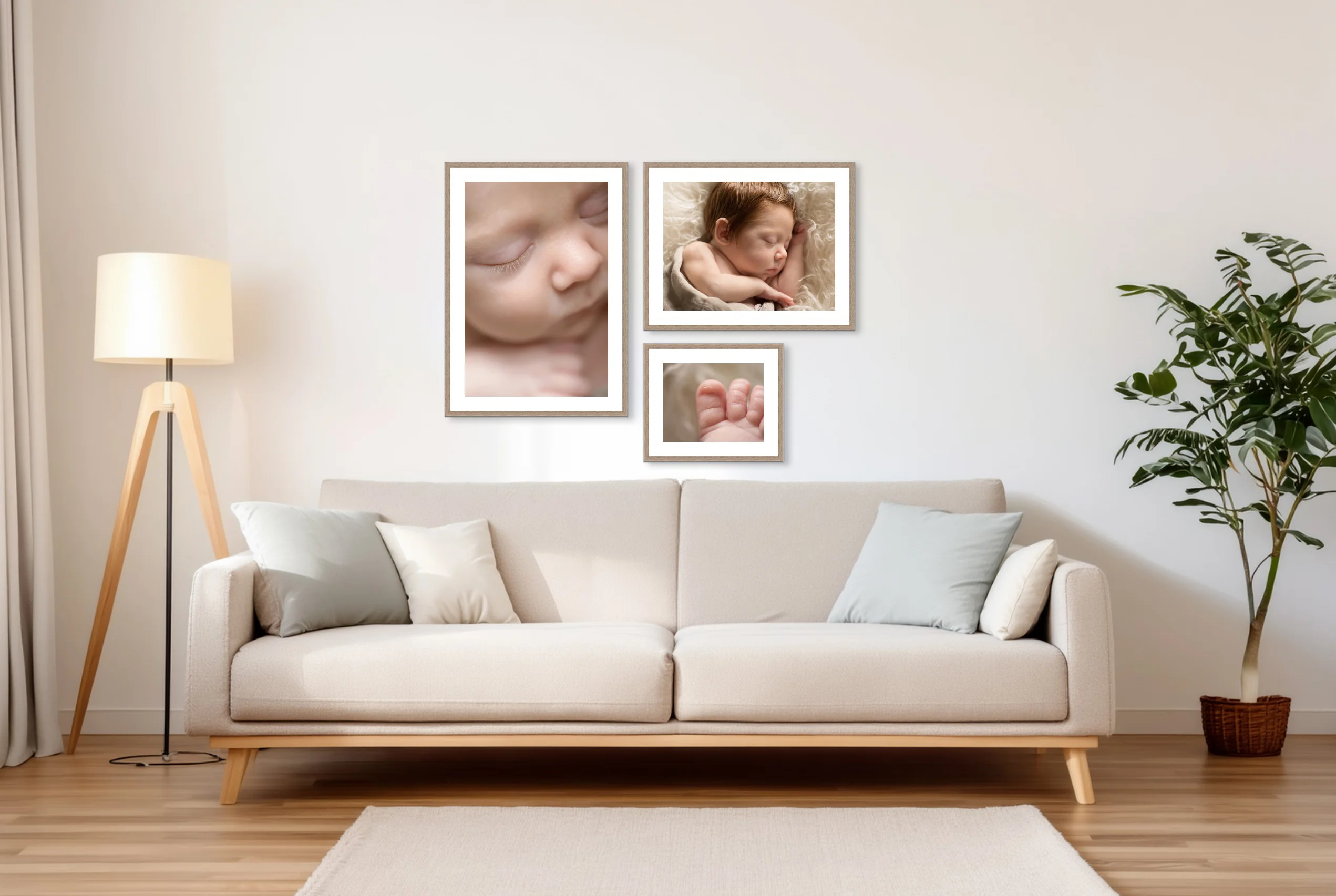
Some of my most appreciated showstoppers have been intimate images, like a tightly cropped portrait of a sleeping newborn, that were printed properly BIG.
So big that you could count every eyelash and the creamy pastel pink gradient of the baby’s skin started to feel almost abstract.
These large close-up pieces also work well when printed in black and white, with minimal framing. They suit modern rooms with clean lines and can easily stand alone on a feature wall. They’re what I would call “emotional artwork” – very personal and one step removed from a traditional family portrait.
Try it on the Wall
On paper, certain print sizes can sound huge. But in reality, they really aren’t! If you’re not sure about what size to go for, do this:
- Take some brown paper or newspaper pages taped together, and cut to your preferred frame sizes;
- Tape the paper to your wall where you’re considering placing the photo;
- Stand back, and see if the size fits the space.
This method is especially helpful when trying to visualise grouped frames or gallery walls.
As a matter of fact, it’s exactly what I do (digitally!) at Reveal appointments with my clients, when we’re planning the perfect gallery layouts for their walls.
Mounts and Orientation
Mounts (the white border inside the frame) are a must for an elegant frame – and they’re a way of giving your photo room to breathe. They also help smaller prints feel more anchored in a larger wall space, making them more prominent and protecting the image from touching or sticking to the glass. The vast majority of my client portraits come mounted.
Another consideration we make is whether we should go for portrait or landscape orientated shots. Vertical photos in larger sizes need taller spaces (like homes with high ceilings, or staircases), while horizontal frames feel more grounded and can be quite easy to place in most parts of the home, like above beds, sofas, or sideboards.
And don’t forget square formats! These feel modern and balanced, especially when grouped together.
Select Images that Go Well Together
When you’re creating a display, think beyond individual photos, and consider how they interact as a set. These are my main considerations when creating a multi image display:
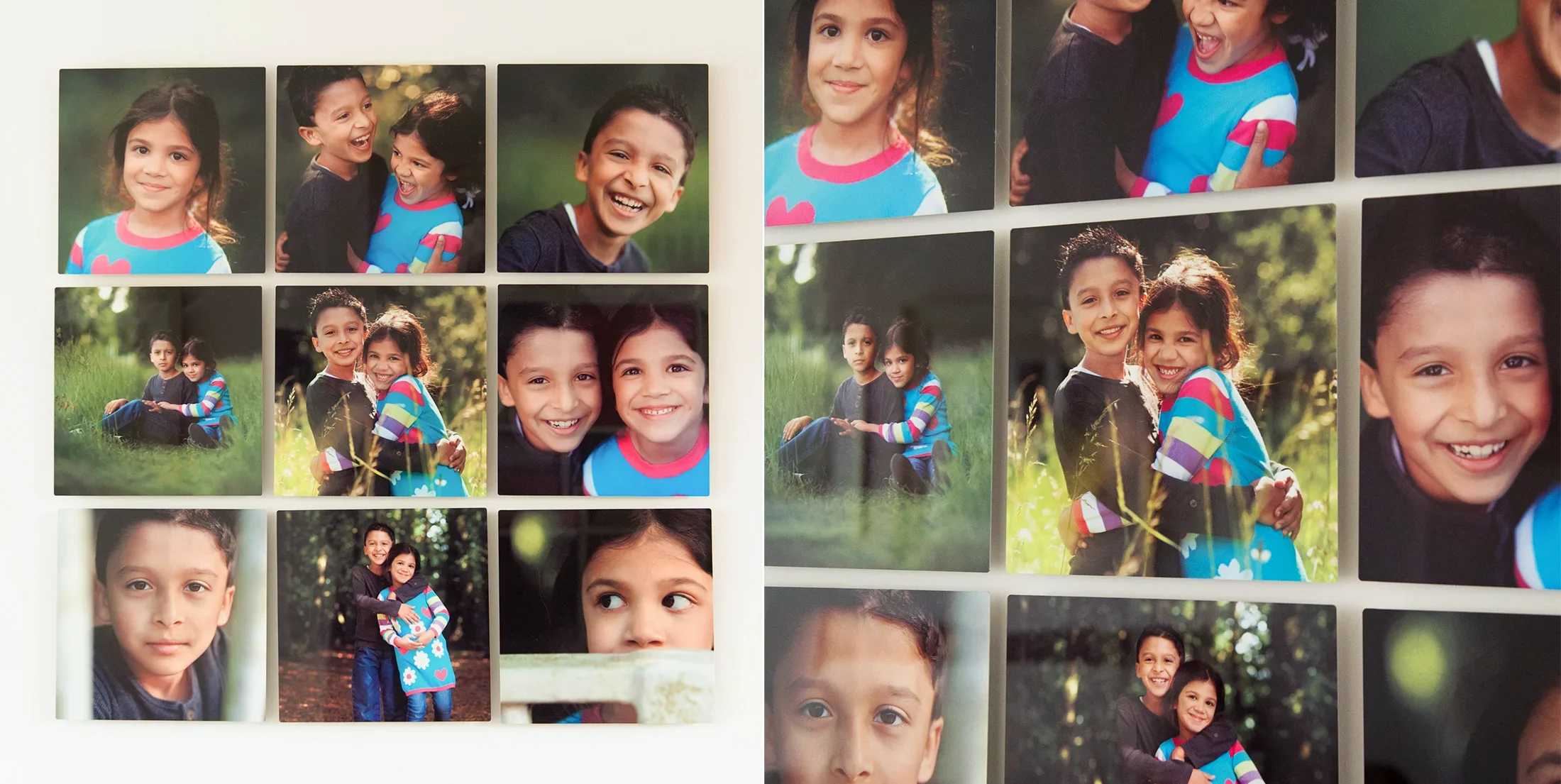
Do they flow well together? I like to make sure the direction people are facing or looking leads the eye naturally from one frame to the next.
Do they match emotional energy? A more intimate portrait can feel out of place next to a high-energy action shot (unless we’re going for the high impact factor!)
Are they “samey” in perspective? We’ll want to mix close-ups with wider, pull-back shots to create rhythm and keep the display interesting.
Are they edited consistently? While it’s normal to have changes in natural light, it’s important to keep similar tones throughout to keep a sense a continuity across the display.
Laying prints out side by side before framing is the best way to pick out any image that doesn’t fit the ensemble.
Colour or Black & White?
Should you go classic with black and white or keep it in colour? You might have your own preference, so there certainly is no one right answer. Let’s work through why we might choose one over the other.
Why Go Black & White?
Black and white portraits have a timeless quality that can almost transform a photo into a work of art. They work particularly well when we want to focus on emotion and connection.
Black and white may also be our friend when we want to minimise the impact of a distracting or busy background, or if we want to put together a gallery with very different colours (for example with images taken across various seasons).
All that distraction is minimised when we display in black and white. The new focus will be expressions, connections, and textures. So simple and clean!
When to Choose Colour Instead
Colour adds vitality and dimension to an image, especially those shot outside where the light, leaves, or clothing choices are integral to the feel.
Generally, colour will be be a better option for lovers of vibrant tones, especially from seasonal outdoor photoshoots (hello autumn leaf kicking and summertime beach splashing, we need to see you in full technicolour!)
There’s also a big case for colour, when we have planned the palette of the shoot to match the decor of your home. This is often the case for the beautiful soft neutrals of newborn photo shoots.
Can You Mix Colour and Black and White?
“Yes, but”. Mixing colour and B&W in the same space can work, but let’s be mindful of a few considerations. Where we have such a strong contrast between the two, we need to achieve harmony through other means.
For example, we can ensure that the frames and mounts are identical, and plan a symmetrical layout with a good flow.
Where we put each image matters – for instance arranging the B&W on top row and colour below.
A more scattered approach can feel a bit jarring and less intentional. If in doubt, choose one route per wall.
Heirloom Wall Art – High-End Materials and Details
A cheap frame is a false economy, because your photos aren’t just for now. Frame them well, and they will be preserved for years to come.
Archival Quality Prints and Frames
Professional prints are not the same as what you’ll get from a high street kiosk or online photo site. The prints I offer are produced on archival-grade fine art papers, with pigment-based inks designed to resist fading for up to 100+ years.
And frames are certainly not an afterthought. All my frames are handmade, using acid-free mounts and backings. These materials protect your photo prevent discolouration, warping, or degradation over time.
UV Protection and Glass Options
Light will degrade the colours of photographic prints over time. If you’re planning to hang your portraits in a space that gets strong daylight – such as a stairway, conservatory, or near windows – it’s worth opting in UV-protective glass.
You can also upgrade to non-reflective or museum-grade glass, which dramatically reduces glare and gives a clearer view of your image. This is especially helpful in rooms with overhead lighting or mixed light sources.
Frameless Options: Acrylic and Aluminium Panels
For those who prefer a clean, modern look, frameless displays are a brilliant alternative. Acrylic and aluminium panels offer a sleek finish that works particularly well in minimalist or contemporary homes.
Aluminium, in particular, has a beautiful gloss texture and exceptional sharpness. It’s also lightweight and durable – ideal for large prints or areas where traditional frames might feel too bulky.
My Product Range page has some helpful info and images on the display options I offer – please feel free to take a look.
Case Study: An Aluminium Staircase Gallery
One of my favourite client families had a gorgeous stairwell wall that was just begging for a centrepiece family portrait – high ceiling and flooded with natural light. We wanted something that could fit into the space without adding too much visual weight. A traditional frame would have felt too heavy, but something too subtle might get lost.
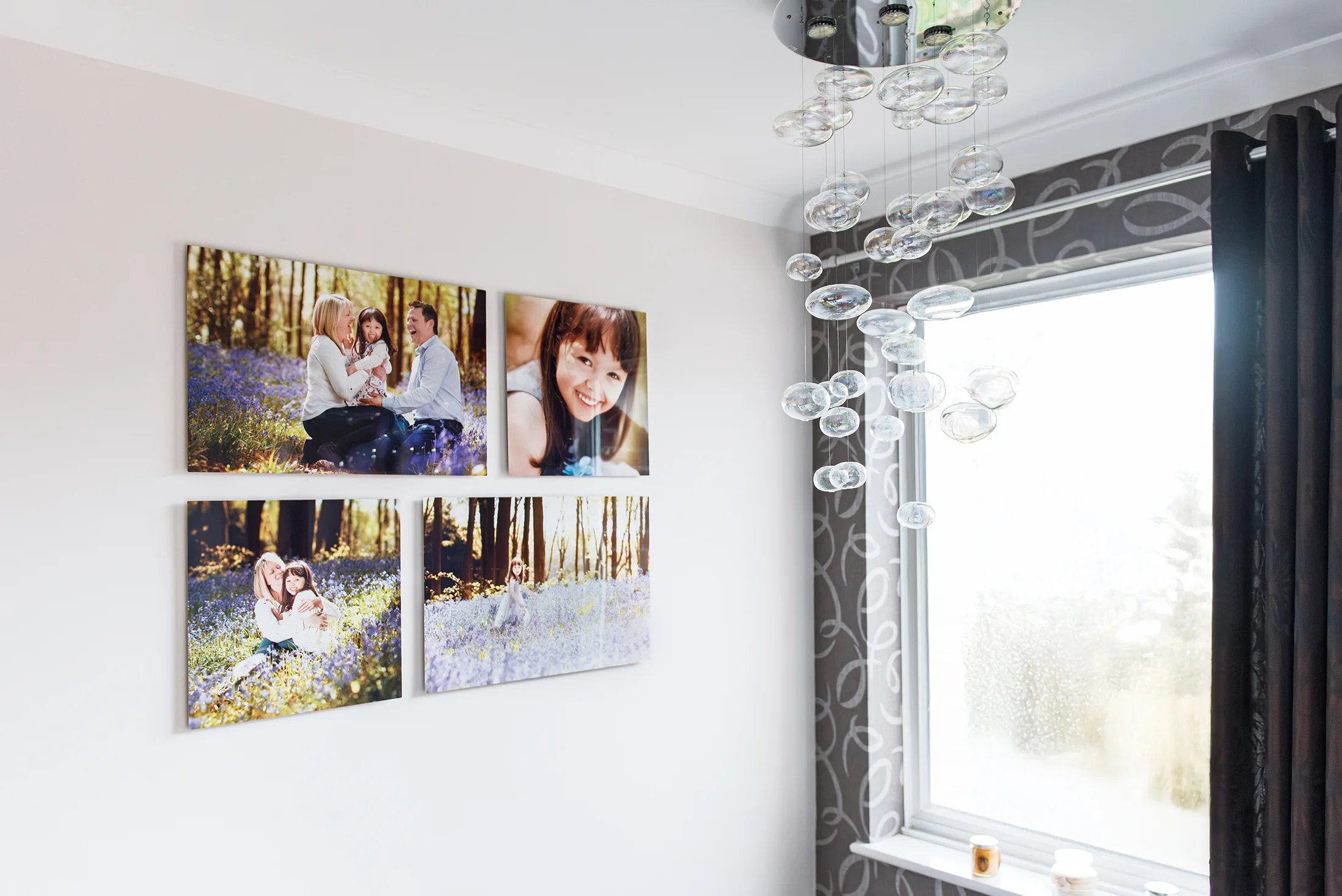
We selected four images from their yearly family session and printed them on aluminium panels in a clean pastel palette. There was a clear visual flow between the images, taken in a sunlit bluebell woods.
We alternated close-ups, connected family shots and wider shots incorporating the colourful landscape.
Mounted in a horizontal symmetrical pattern at the top of the stairs, the result was modern and of great visual impact when coming up the stairs. It really brought an often-forgotten part of the home to life.
Frameless options like this are also very low-maintenance, as they are very light, have no glass to clean and easy to wipe down.
At the End of the Day… Make it Yours
The best family portrait displays are the ones that feel right for your home, your story, and your style. In my home, I display many of my children’s photos taken over the years, and have been known to break a few design rules here and there. I just followed my heart, because I want to love what I see when I walk past these photos every day.
If you’ve recently had a session with me, or if you’ve procrastinated on printing your favourites for a while (let’s face it – who doesn’t), let’s talk about how to bring them to life. As part of my service, I offer bespoke wall design advice, frame samples, and mock-ups so you can see exactly how your images will look before you commit.
As I always say… family photos shouldn’t just live on your phone or a USB in the drawer. They deserve a frame – and a place on your wall.